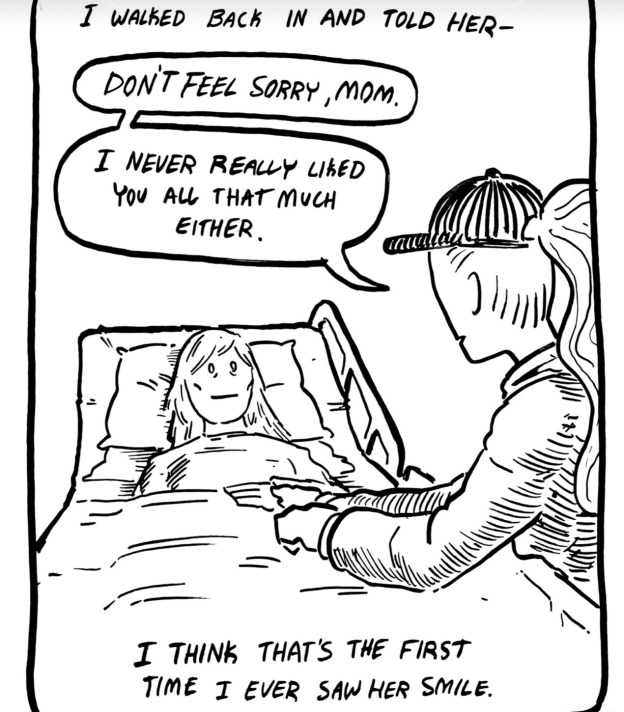
I was on Tik-Tok recently, and I saw this comic strip that described this mom struggling to connect with her daughter. The comic displayed a mother and daughter living together but the two never experienced a closeness with each other. At the end of the mother’s life the mother apologized for never feeling close to the daughter and unbeknownst to the mother, the daughter felt the same way, which in some way, actually made them closer together. Maybe for the first time?
Every parent I know asks some version of the same quiet question, “Why don’t I feel relationally close to my adult children?” It’s a question that is more common than we realize. Especially when nothing harmful has happened in the relationship.
But before we answer it, we have to name the cultural air we breathe: modern American parenting assumes emotional intimacy is both normal and guaranteed. You pour in love, presence, time, and sacrifice, and the connection should feel mutual. Anything less feels like something went wrong.
But that assumption is largely shaped by Hollywood and the last 100 years of wealth in the United States that has given parents and children this expectation in the family. American culture tends to elevate relationships into idealized narratives; romance, success, individuality, and yes, parenting. That narrative inflation often creates pressure, guilt, and confusion that previous eras simply didn’t have.
Think of films like Finding Nemo and Interstellar, or the way most modern stories reshape the family dynamic into emotional destiny with one another. For most of history, the parent–child relationship was built on: responsibility, protection, guidance, apprenticeship, and community participation.
It was rarely constructed around deep emotional connection with one another. But modern American culture elevates the parent–child bond into something almost romantic. Emotional alignment is expected. Deep conversations with one another is the assumption.
The rise of the nuclear family in the 1940’s didn’t help. Families started having less children. Families became more disconnected from aunts, uncles and grandparents, so that the emotional responsibility on the parent-child relationship grew stronger. After the 1950’s the average family had more time and more resources to put pressure on this relationship. Then, in the 1970’s emotions became central to identity and parenting started to center around the child’s inner world.
And when the ideal bond in the hearts of parents and children isn’t realized, as is often the experience, the parent and the child assume this is some type of failure on their part. But there are no studies in relational development that should give us this expectation and there are no biblical promises that faithful parenting produces emotional symmetry.
Studies in Relational Development
Human relationships, even family ones, are not mechanically guaranteed just because the people involved share DNA. Decades of developmental research (from Chess & Thomas onward) show that temperament differences are often the #1 predictor of felt closeness, more than parenting style.
- introverted child / extroverted parent
- sensitive child / pragmatic parent
- highly structured parent / spontaneous child
- achievement-driven parent / relationally-driven child
No injury is required. Just difference. And if a sibling’s temperament matches the parent more closely, the contrast becomes even clearer. The reality is some parents and children share a natural rhythm and some don’t. Some click with ease, and some take effort. Emotional chemistry between a child and parent is a gift, not a moral achievement.
In addition, cognitive style between parent and child and how they process the world also has a huge influence. If one child processes the world more intellectually and the parent processes emotionally, it is going to create relational dissonance. Both might be healthy. The parent and child just don’t harmonize.
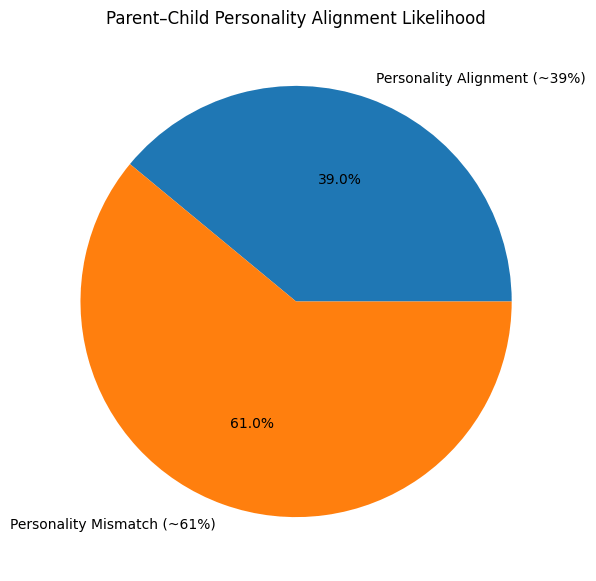
Then, you tie in some American Idealism with a splash of Disney and it creates this expectation of constant closeness and “best friend” energy that was never realistic. In fact, studies show when parents give birth to a child they have a 60% chance they won’t have personality / processing similarity with their children, thus creating a disconnect in their relationship with one another.
Biblical Perspective
Scripture gives commands about formation, instruction, protection, and modeling, but never commands a particular feeling between parent and child. In fact, Scripture presents a picture of humanity that makes uneven relational connection completely expected.
First, we often hear the phrase “mini-me” when talking about a child taking on the characteristics of a parent, but God’s Word actually teaches us that every child is made in the image of God, not a replica of the parent.
Therefore, a parent should expect their child to come with different temperament different personality, different ways of processing emotions and different ways of forming relationships.
The mistake modern parents make is assuming children are “blank slates” shaped primarily by parental love and technique. So when a parent says, “We raised our two kids the same, but one feels close and the other feels distant,” the answer isn’t failure.
It’s personhood.
Genesis 3 didn’t just break creation, it fractured relational harmony in our relationships with one another. Desire and connection became inconsistent, unpredictable, and uneven. The relational “fit” between two people is never guaranteed. Even in faithful, godly families, emotional alignment varies wildly.
A strained relationship between child and parent doesn’t mean something went wrong. It means the child is a moral agent before God with different needs, emotions, and decisions. Sometimes those relationships can be very close, and sometimes they can feel functional. None of this means something went wrong.
A parent can be faithful, wise, loving, consistent and a child can be warm and respectful toward their parents, but one or both won’t always experience deep emotional intimacy with the other.
The call of a parent is to teach their child, disciple them, provide instruction, correction, encouragement and model a relationship with Jesus. The call of a parent is never a promise of emotional closeness.
Sometimes the parent and child will experience this with one another or have seasons where they feel closer to one another, but we shouldn’t treat them as biblical requirements or moral outcomes.
Closing: Parent and child didn’t fail, they’re humans.
When a parent and child don’t “click” with one another, it doesn’t automatically point to injury or failure. It points to distinct personalities. Let’s celebrate personality differences instead of building shame about those differences. Each relationship is a gift to discover instead of a grief to lament.
The gospel reminds us that we live in a fallen world. One day Jesus will come and make all things new. Jesus has given us Himself to the parent and the child, so that our ultimate desire is in Him and not the family dynamic.
Are there going to be moments when the child or the parent will watch a movie or see a friend with deep connection between parent and child? Yes! It happens. It might even happen in the same family, but we have a Savior who works in those differences over time, prayer, patience and perseverance with one another. What a glorious bond for a child and a parent to experience with one another: It wasn’t always easy, it wasn’t always natural, but there was a love and respect for one another to keep showing up and keep trying. Isn’t that a better story?
 Serving North Central Austin